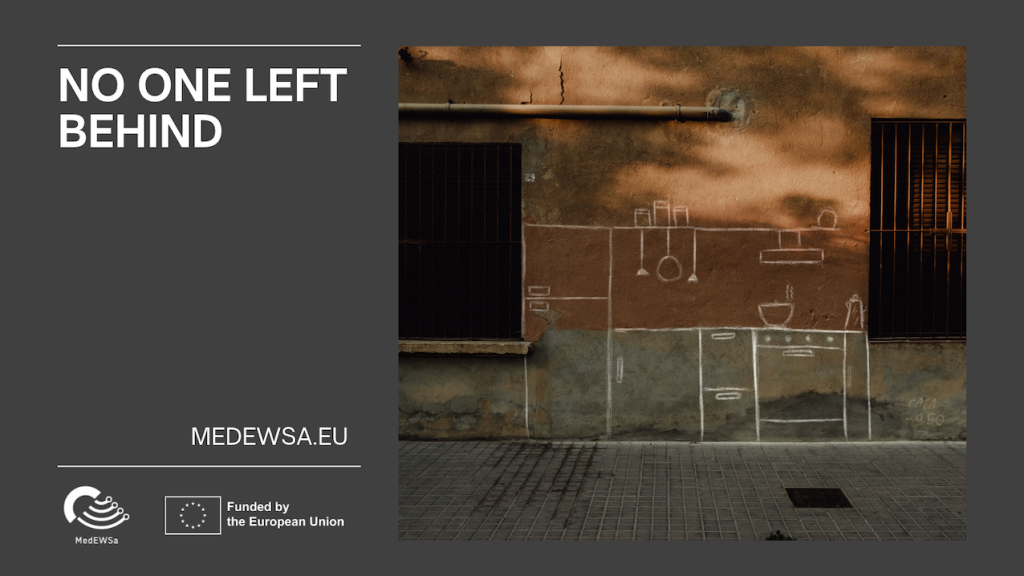
A warning issued on time is not enough if the people receiving it don’t understand it, don’t trust it, or don’t know what to do next. That gap is the starting point of the Handbook of best practices and warning messaging templates to address societal challenges related to natural hazard effects, a deliverable of the MedEWSa project (WP5), now available in its second version and in open access.
A human-centric approach to natural hazards
The Handbook shifts the focus from the hazard itself to the people who live through its effects, starting with the most vulnerable. It offers guidance on a human-centric approach to natural hazards and to multi-hazard risks, where several events overlap or trigger one another.
What’s inside
The Handbook covers three areas:
- Public engagement. How participatory emergency planning can involve communities before a crisis, rather than informing them during one.
- Multi-hazard challenges in the COVID and post-COVID era. Best practices for dealing with risks that now unfold in a context shaped by the pandemic.
- From complex information to actionable knowledge. How to translate technical content into messages that vulnerable end-users can understand and act on.
Warning messaging templates
Alongside the guidance, the Handbook provides templates for warning messages. They are meant for people who communicate risk as part of their daily work: civil protection agencies, meteorological and hydrological services, local authorities and communicators. The aim is to make it easier to write messages that are clear, consistent and useful to the people who receive them.
Who made it
The Handbook is the result of a collaboration between the Red Cross Red Crescent Climate Centre, CIMA Research Foundation, Convergence and GNEA, within the MedEWSa project.
Read it and reuse it
The Handbook is free to download and is released under a Creative Commons Attribution 4.0 license (CC BY 4.0), so you can share and reuse it as long as you credit the authors.
You can find it on Zenodo: https://zenodo.org/records/23882707
If you work in risk communication, early warning or climate resilience, we would be glad to hear how it works in your context.