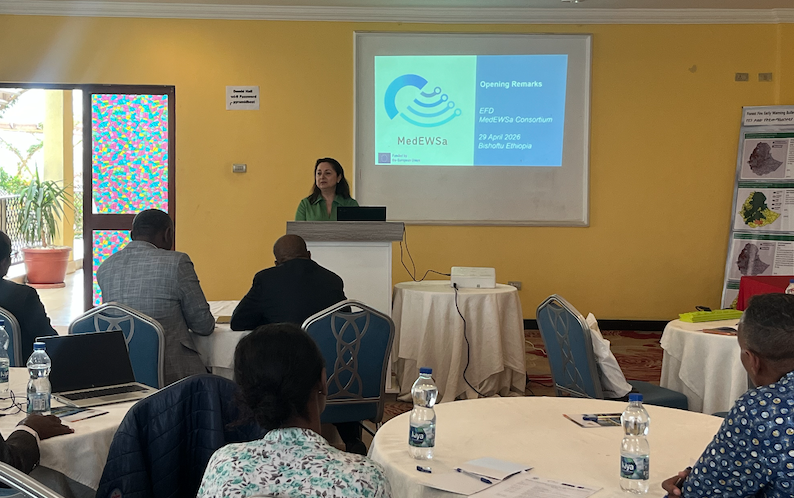
The Ethiopian Forestry Development (EFD) and the CIMA Research Foundation convened a high-level national workshop in Addis Ababa, bringing together federal institutions, meteorological agencies, disaster risk management bodies, and higher education representatives to review the outcomes of three years of pilot implementation under the MedEWSa Project — and to chart the path toward long-term sustainability.
The workshop marked a pivotal moment in Ethiopia’s journey toward integrating advanced multi-hazard early warning technologies into its national forest management and disaster risk reduction frameworks.
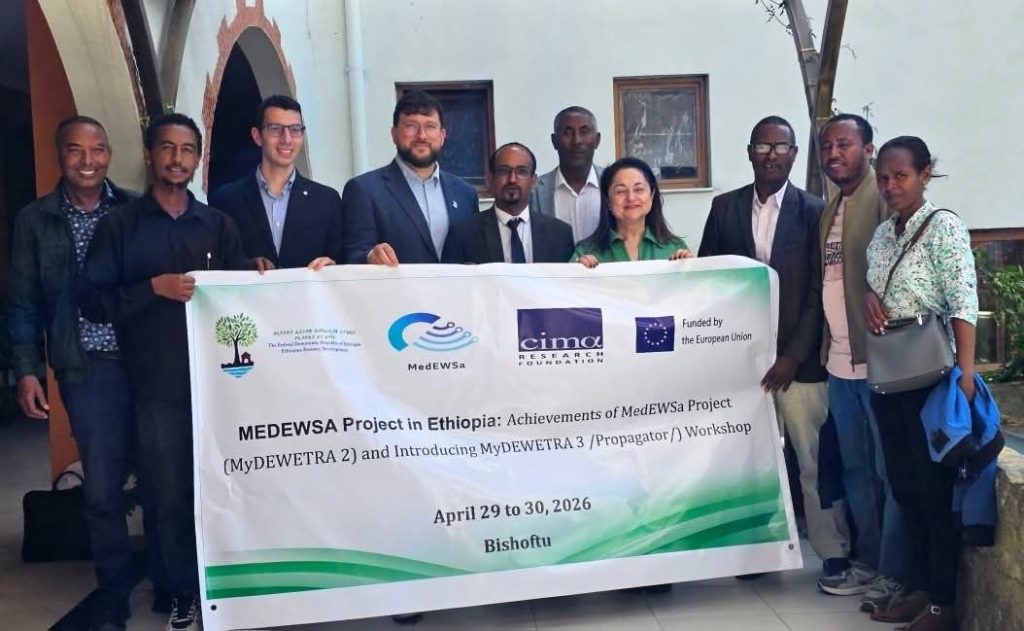
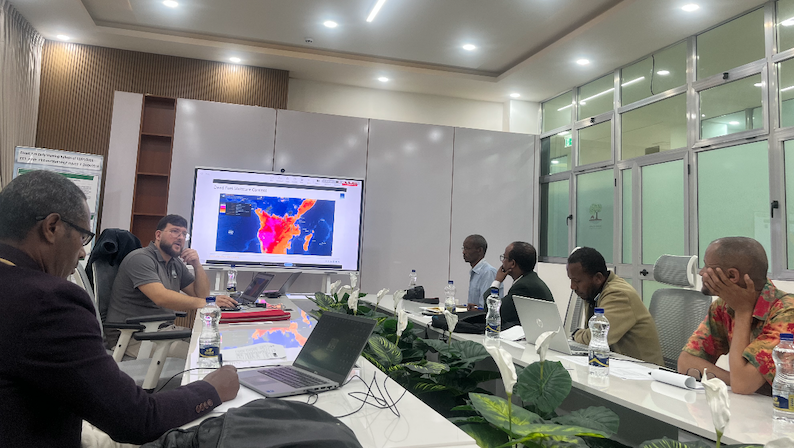
At the core of the MedEWSa Ethiopia pilot is a suite of operational tools co-developed and adapted with CIMA Research Foundation: RISICO, a fire danger rating system producing daily risk forecasts; PROPAGATOR, a fire-spread simulation model enabling scenario-based response planning; and MyDewetra, an upgraded web-based GIS platform supporting real-time data integration and visualization. Together, these tools form the backbone of Ethiopia’s Decision Support Dissemination System (DSDS) — a platform that now enables the generation and dissemination of timely forest fire early warning bulletins to all regional states and city administrations.
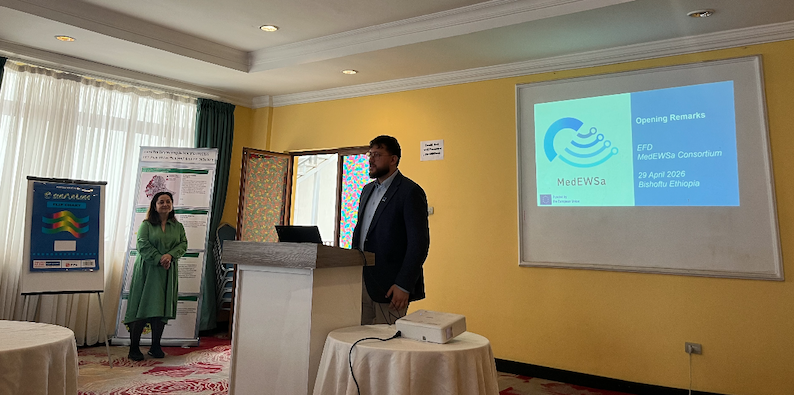
Opening the workshop, H.E. Ato Kebede Yimam underscored the transformative role of the CIMA Foundation in bridging global innovations with Ethiopian realities and emphasized the strategic importance of embedding these systems within national institutions for lasting impact.
Protecting People, Forests, and Biodiversity
Ethiopia’s pilot sites — Simien, Bale Mountains, and Gambella National Parks — represent ecosystems of exceptional biodiversity and global conservation significance. The MedEWSa early warning system has already contributed to protecting these landscapes from wildfire damage, while also safeguarding the communities and wildlife that depend on them.
Dr. Motuma Tolera, Head of the Forest Science and Technology Unit at EFD, highlighted how operational deployment of these tools has strengthened Ethiopia’s capacity for evidence-based forest management, and outlined EFD’s ambitions to scale the system further.
From Pilot to Practice: The Road Ahead
Ato Kabtamu Girma, CEO for Natural Forest at EFD, reminded participants that the technical sessions would continue the following day, with working groups addressing outstanding operational issues and defining the way forward for system sustainability and institutional ownership.
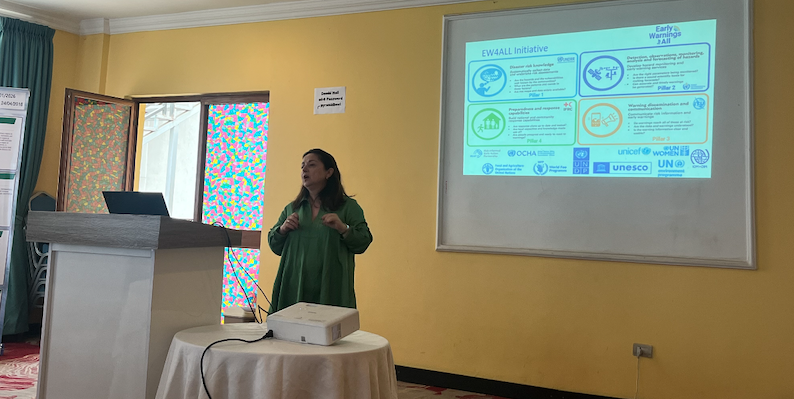
The workshop underscored a broader principle central to MedEWSa’s mission: early warning is only as valuable as the early action it enables. As Ethiopia’s implementation demonstrates, that translation, from data to decision, from alert to response, is precisely where institutional capacity, training, and cross-sector coordination make the difference.
The MedEWSa Project is a Horizon Europe-funded initiative coordinating eight pilot sites across the Euro-Mediterranean and Africa region through a “twin” approach that fosters knowledge transfer between areas of contrasting capacity facing shared hazards.