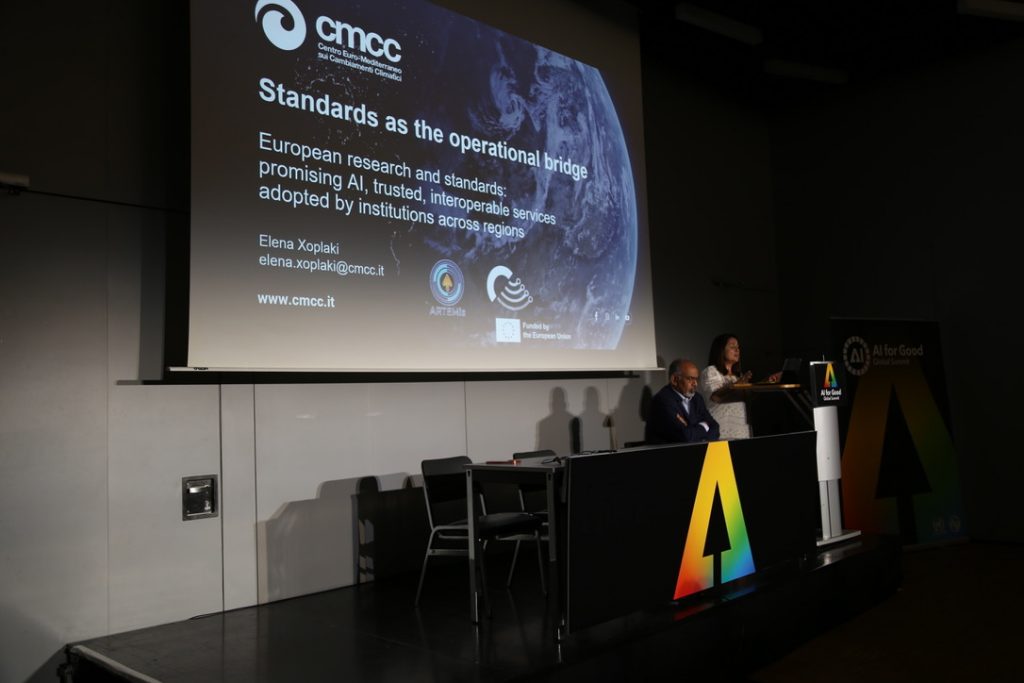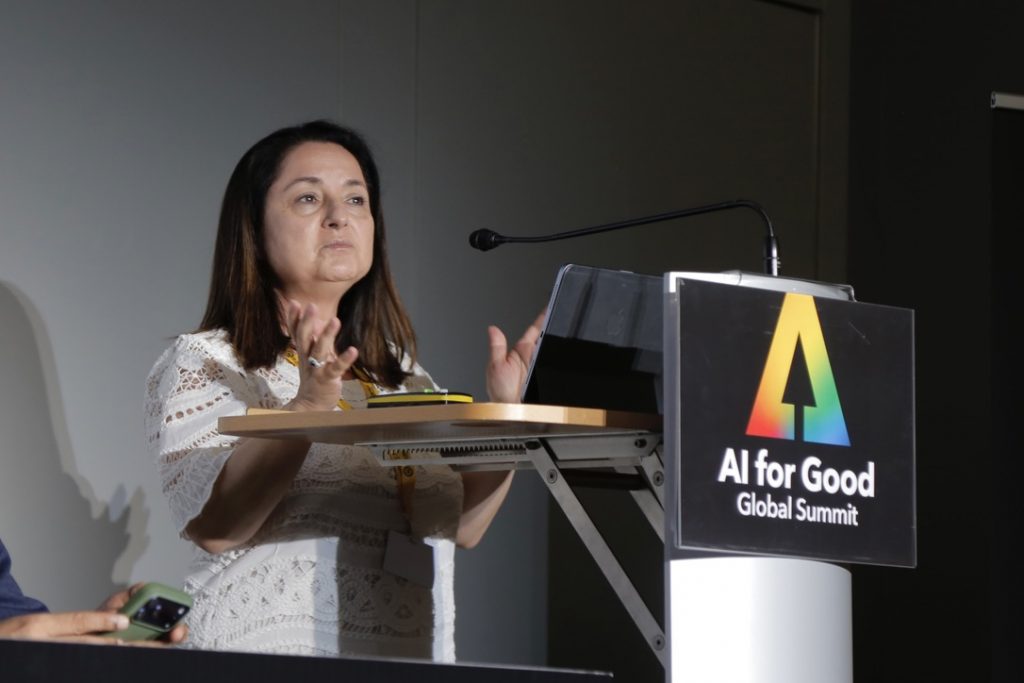
Elena Xoplaki represented MedEWSa as a panelist at the AI for Good Global Summit in Geneva. The session, AI in disaster resilience: Bridging science, standards and innovation, ran on 7 July 2026 as part of the summit’s Day Zero programme at Palexpo. The workshop sat under the Global Initiative on Resilience to Natural Hazards through AI Solutions, the ITU platform that connects researchers, standards bodies and technology developers working on natural hazard management.
The workshop tackled a problem MedEWSa knows well. AI keeps producing breakthroughs in hazard monitoring, forecasting and hydrology, but turning that research into tools governments and responders can actually use remains hard. The session brought together leaders from across the disaster resilience field, including senior figures from the World Meteorological Organization, the European Centre for Medium-Range Weather Forecasting and UN-Habitat, alongside scientists from the European Space Agency, to examine how science, standards and innovation can close that gap together.
Xoplaki brought MedEWSa’s experience directly into that conversation. The project has spent three years building the exact bridge the workshop set out to discuss. Its Decision Support and Dissemination System links forecast production, impact assessment and warning dissemination into one platform, tested across eight pilot sites in Europe, the Mediterranean and Africa. That track record gave the panel a working example of what science-to-standard translation looks like in practice, not just in theory.
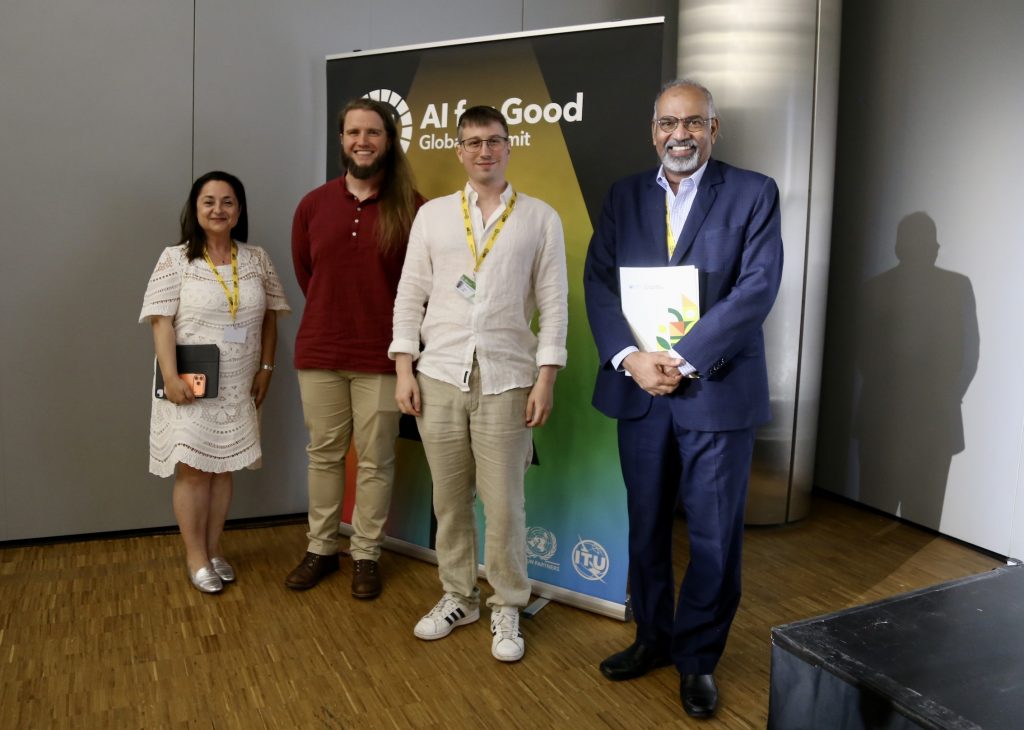
The organisers thanked Xoplaki afterward for the value her insights and participation brought to the session, and shared photos from the discussion. MedEWSa is glad to have had a seat at this table. The themes raised in Geneva, closing the gap between research and operational deployment, and building shared standards for AI-enabled early warning, are the same ones MedEWSa carries forward into its work with ARTEMis over the coming years.