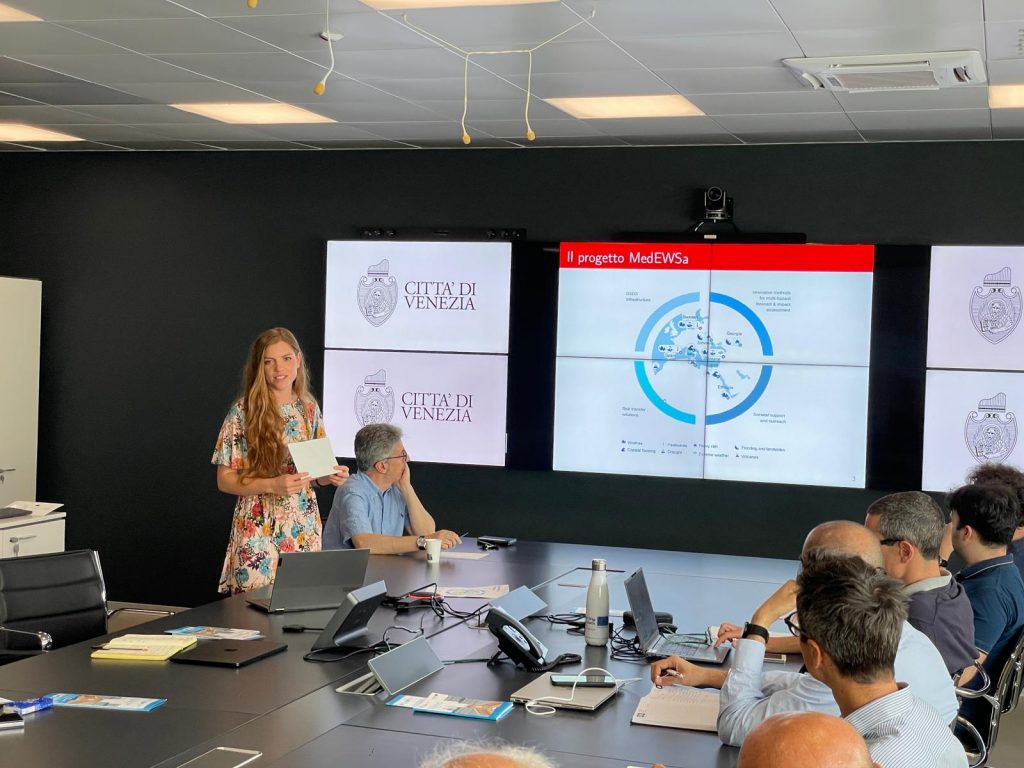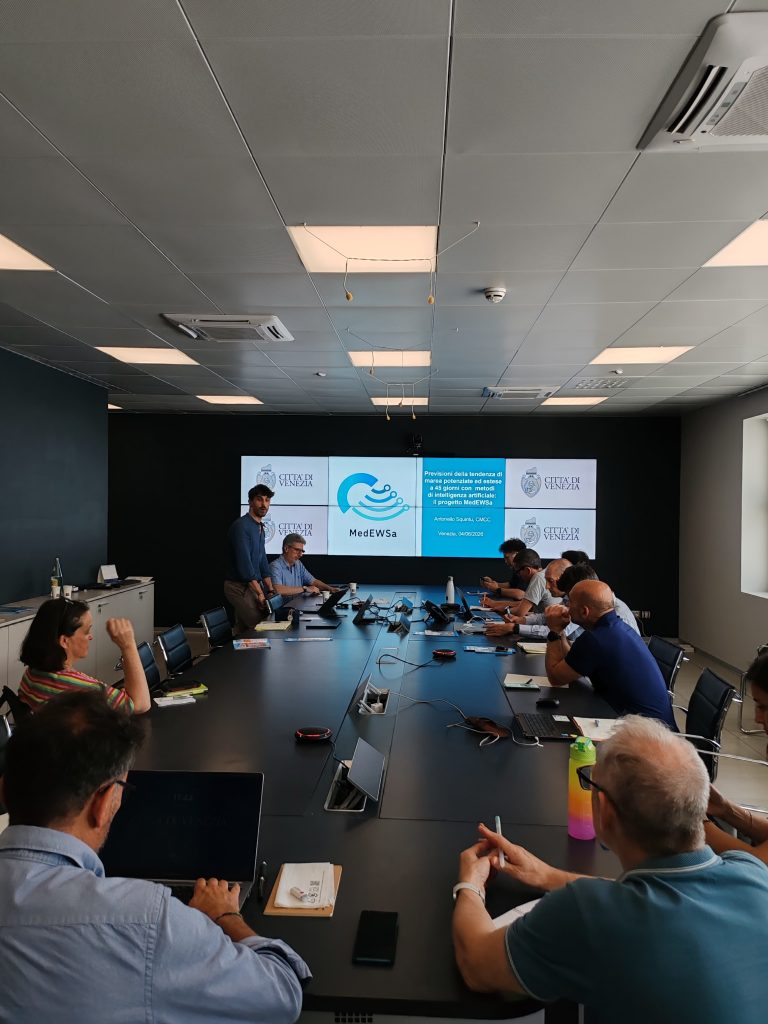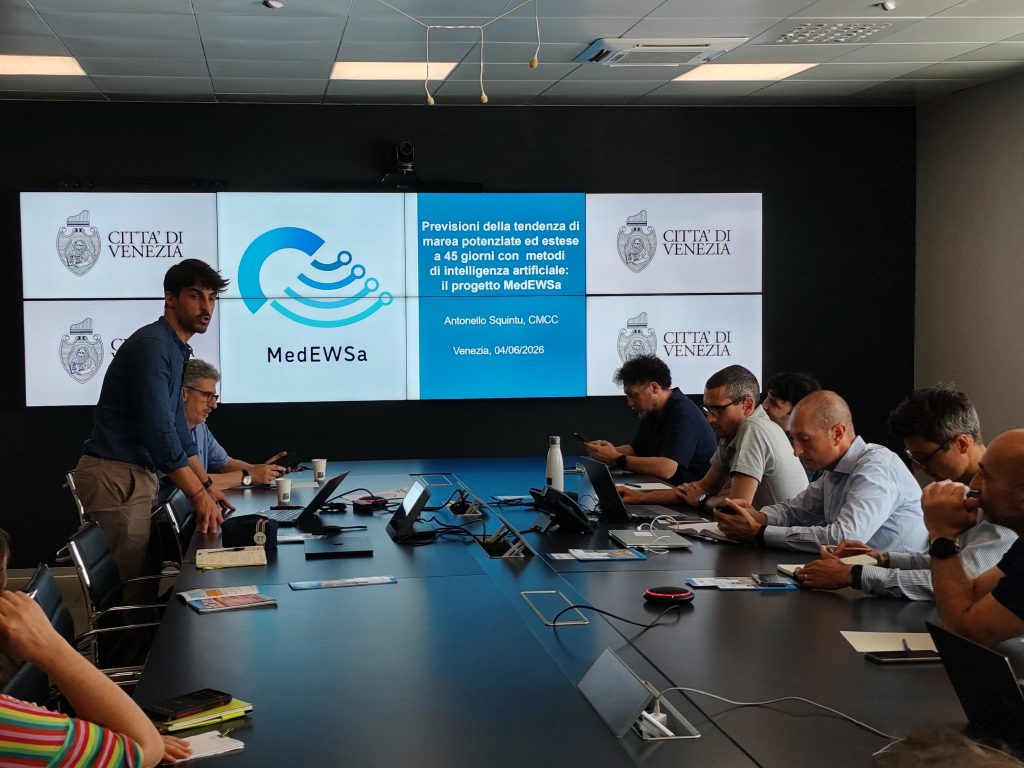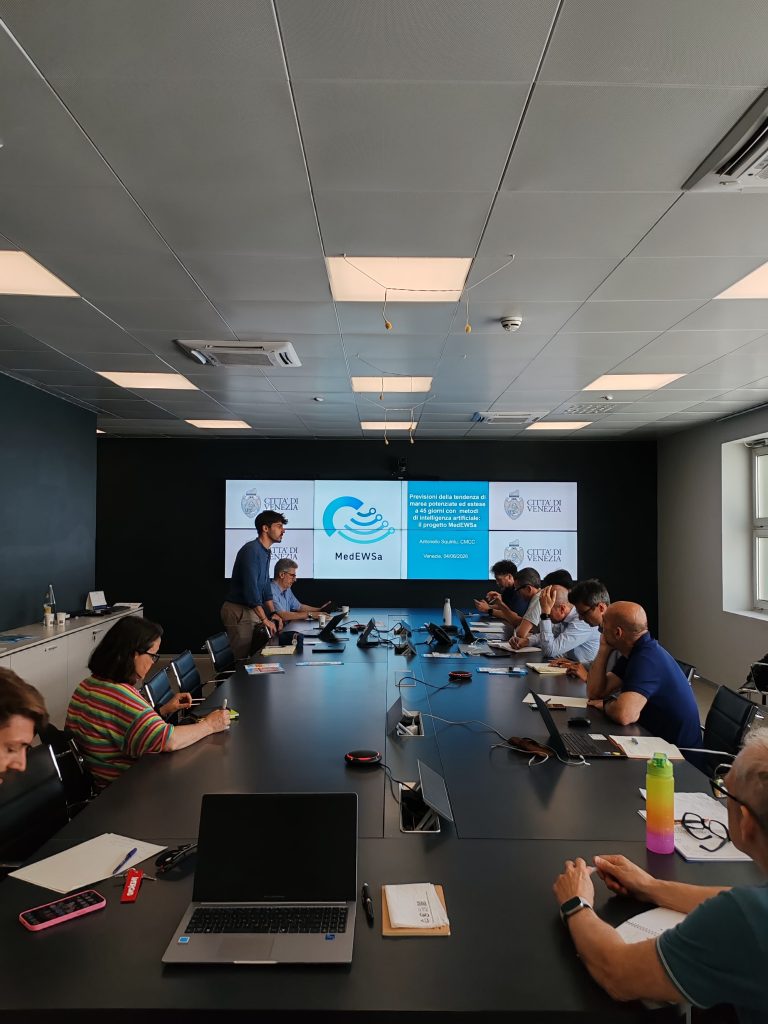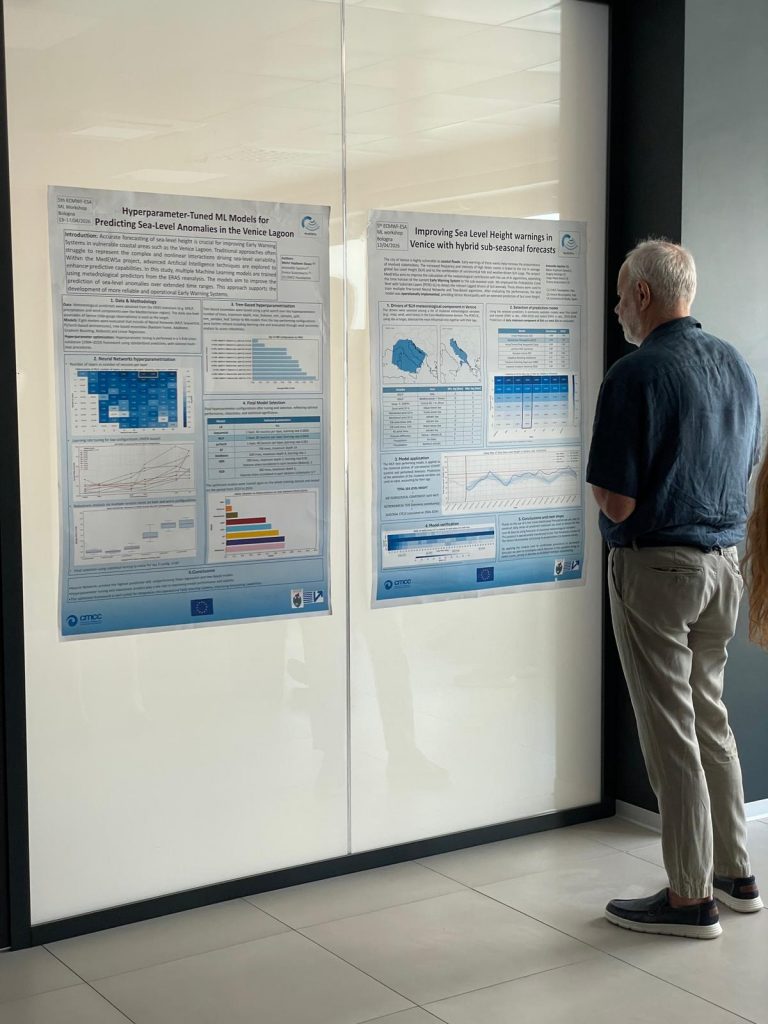
On 4 June, CMCC and the Centro Previsione e Segnalazione Maree (CPSM) of the City of Venice co-organised a dedicated workshop at the Smart Control Room of the Comune di Venezia: “45-day sea-level trend forecasts for Venice: opportunities and limits.”
The half-day event brought together researchers and local authorities to explore the new tools developed within MedEWSa for coastal flood early warning, tools designed not just for science, but for operational use by the people managing flood risk in one of Europe’s most vulnerable cities.
Two presentations framed the technical discussions:
Angela Andrigo (CPSM) presented the Centro Maree’s activities within MedEWSa, including higher-resolution model inputs and the extension of operational forecasts to a 45-day horizon.
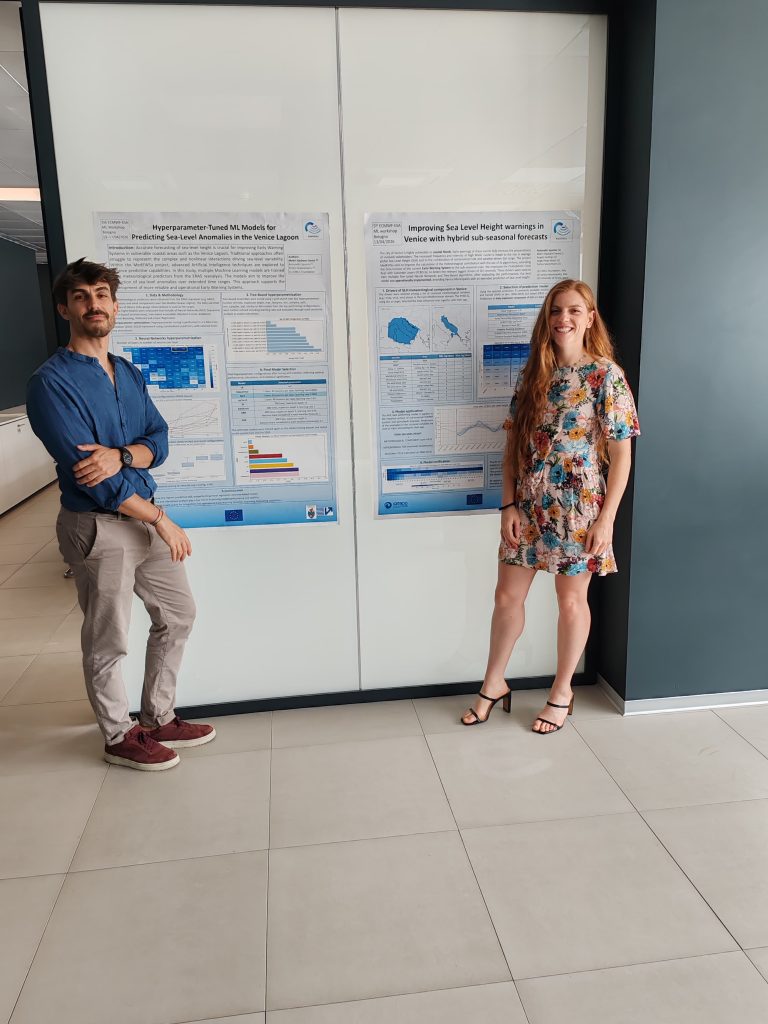
Antonello Squintu (CMCC) introduced AI-based methods, combining ERA5 meteorological predictors with neural networks and tree-based models, to further enhance and extend sea-level trend forecasting within the MedEWSa framework.
The session also included a visit to the Smart Control Room and a MedEWSa stakeholder survey, reflecting the project’s co-design approach: building early warning tools in direct dialogue with the authorities who will use them.
Venice is one of MedEWSa’s eight pilot sites and forms Twin #2 together with the Alexandria/Nile Delta region in Egypt, with both areas sharing exposure to coastal flooding and extreme precipitation. Engaging directly with the City of Venice is a central part of MedEWSa’s co-design approach, ensuring that forecast tools are developed in dialogue with the authorities responsible for managing flood risk on the ground.
Together, these contributions reflect MedEWSa’s commitment to advancing the science of impact-based early warning — and to translating that science into tools that are useful, actionable, and co-developed with the stakeholders who need them most.