From 4 to 6 November 2025, experts from scientific institutions, policy bodies, and emergency-management organisations gathered in Turin to explore a central question: how can science more effectively guide preparedness and response to natural, technological, and human-induced disasters?
The EU Science for Preparedness Conference, which brings together the Copernicus Emergency Management Service (CEMS) and the Disaster Risk Management Knowledge Centre (DRMKC), delivered a clear message this year: science must actively drive disaster risk management, not merely inform it.
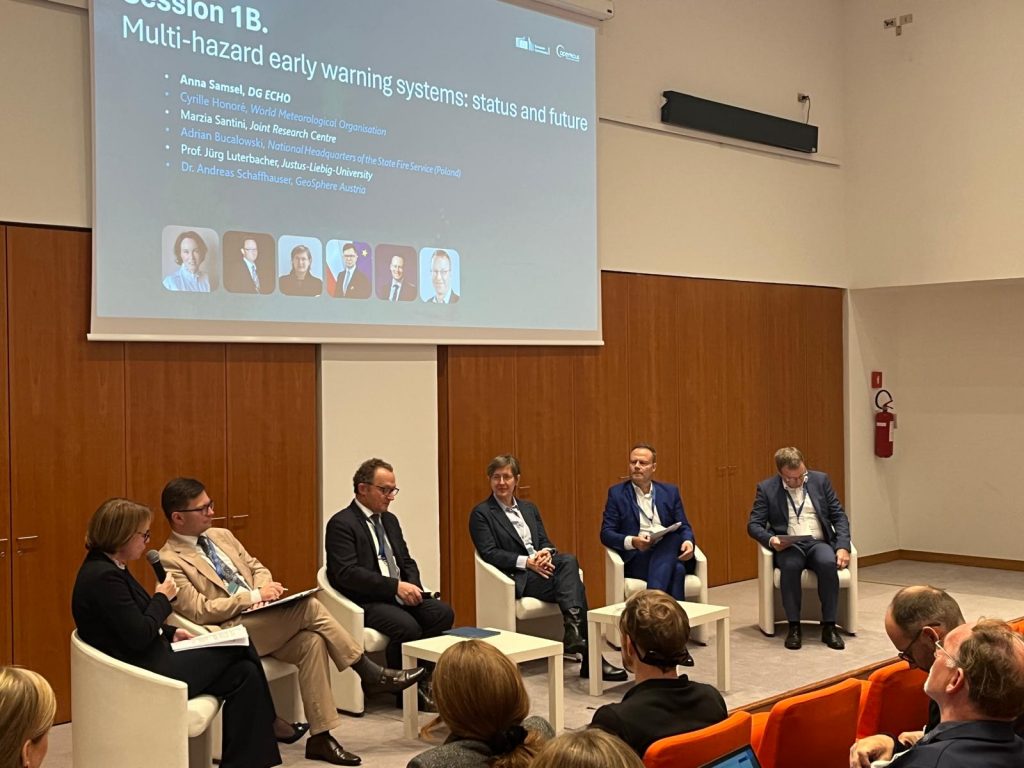
We at MedEWSa were proud participants in this gathering, alongside leading scientists and decision-makers — exploring how innovation can reinforce Europe’s crisis resilience, from early-warning systems to multi-hazard modelling and foresight-driven preparedness.
Why this conference matters
As highlighted by conference reports, Europe faces a growing mix of natural, technological and human-driven risks. In this complex landscape, there is an urgent need for science to move beyond academic research and deliver “user-ready tools” that align with real-world operational needs. Speakers stressed that preparedness must cover the entire risk cycle — from prevention and forecasting, through response and recovery — rather than stopping at reactive measures. Equally important was the call for cooperation: not just within the EU, but also globally. The conference urged strengthening partnerships — for example with regions such as Latin America and Africa — and aligning data standards, institutional capacity and funding mechanisms for sustainable, interoperable crisis-management systems.
MEDEWSa’s role, and special thanks
Throughout the event, MEDEWSa joined discussions on how innovation can strengthen crisis resilience across the continent. From anticipatory early-warning systems to integrated modelling capable of accounting for several hazards at once, our work resonated with many of the challenges being addressed. We extend special thanks to Jürg Luterbacher, Prof. PhD, whose thoughtful contribution amplified MEDEWSa’s role and underscored how science-based preparedness can reshape Europe’s risk landscape. His insight helped frame preparedness not as a checklist, but as a living system — one that evolves, adapts, and responds in real time.
Looking ahead: from ideas to impact
The main takeaway from the conference: scientific evidence must translate into operational capacity. It is essential to bridge the gap between prototype development and real world deployment — scaling solutions, ensuring trust and usability, and enabling first-responders and decision-makers to act effectively when crises strike.
For MEDEWSa, this aligns perfectly with our mission. We remain committed to working with European partners to develop robust early-warning and risk-modelling tools, integrate multi-hazard approaches, and promote a culture of preparedness grounded in evidence, collaboration, and foresight.